
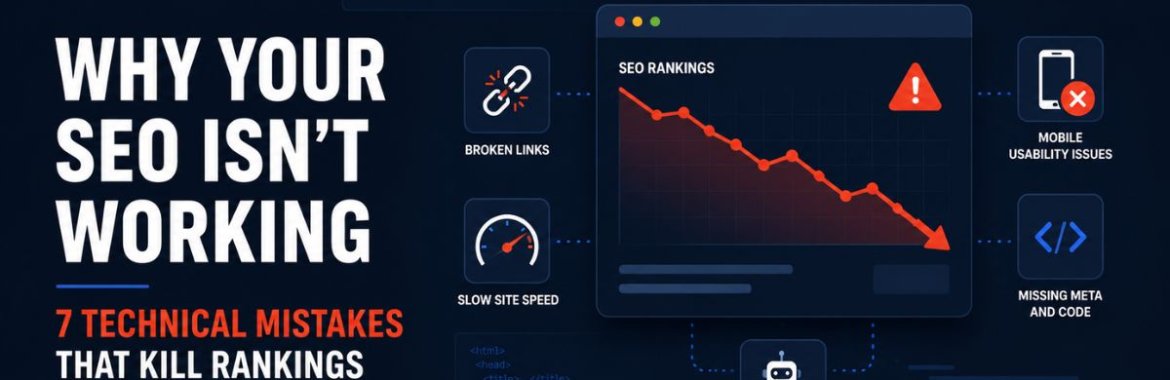
You’ve published content consistently, built a few backlinks, and even followed the “best practices” checklist you found online. Yet your rankings haven’t moved in months. If that sounds familiar, the problem probably isn’t your content strategy at all. It’s what’s happening under the hood.
Most businesses focus entirely on content and links while ignoring the technical foundation that determines whether Google can even crawl, index, and rank their pages properly. We see this constantly at our agency: solid content sitting on a site riddled with technical SEO mistakes that quietly cancel out every other effort. If you work with an SEO company in Chennai, they should first check your site’s technical health, not your keyword list. It’s your site’s technical health.
Why Technical SEO Gets Overlooked
Technical SEO doesn’t produce anything visible. There’s no blog post to show a client, no social share to point to. It lives in server response codes, crawl budgets, and structured data markup, things that don’t feel urgent until rankings drop and nobody can explain why.
That invisibility is exactly why these issues survive so long. A site can look polished on the surface while broken redirects, duplicate content, or a bloated codebase quietly suppress its visibility in search results. Most audits we run turn up at least four or five technical SEO mistakes the site owner had no idea existed. Let’s walk through the seven mistakes we see most often, and why they matter more than most SEO checklists give them credit for.
1. Slow Page Speed That Google (and Users) Notice
Page speed is a confirmed ranking factor, and it’s also the fastest way to lose a visitor before they even see your content. If your Largest Contentful Paint takes more than 2.5 seconds, you’re already behind.
The usual culprit? Images. We’ve opened sites where a single product page loads six or seven uncompressed photos at full resolution, some over 3MB each, when a properly compressed version would do the job at a fraction of the size. Lazy-loading fixes half the problem instantly, since below-the-fold images simply don’t load until someone scrolls to them.
CSS and JavaScript pile up the same way, with old plugins leaving behind scripts nobody uses anymore that still have to load before the page renders. Minify what stays, defer what isn’t needed immediately, and if your visitors are scattered across different regions, a CDN cuts real seconds off load time by serving files from a server closer to them.
2. Broken or Missing XML Sitemaps
Your sitemap tells search engines which pages matter and how your site is structured. When it’s outdated, missing key pages, or still listing URLs you deleted last year, crawlers waste time on pages that don’t matter and may miss the ones that do.
This is one of the common SEO mistakes that’s genuinely easy to fix but rarely gets checked once a site is live. Set a reminder to audit your sitemap every quarter, especially after any redesign or URL restructuring.
3. Duplicate Content Confusing Search Engines
Here’s a scenario we run into constantly: a client swears they only have 200 product pages, but Search Console shows Google indexing 600 URLs for the same catalog. What happened? Filter parameters, print-friendly versions, and a syndicated blog post or two are included, but none are tagged with a canonical link pointing back to the original. Google splits the ranking signal across all of them instead of concentrating it where it should be.
This is one of the common SEO mistakes we catch on nearly every e-commerce audit, and it’s rarely intentional. It just accumulates as a site grows, plugins get added, and URL structures change over time.
The fix isn’t complicated once you spot it: canonical tags for duplicates, 301 redirects where a page genuinely no longer needs to exist, and a content structure that gives each unique piece of information exactly one home on your site.
4. Poor Mobile Optimization
Google has used mobile-first indexing for years now, meaning it primarily crawls and ranks based on your mobile site, not your desktop version. If your mobile experience is an afterthought, slow, cramped, with tap targets too close together, you’re handing rankings to competitors with a genuinely responsive design.
Test your site on an actual phone, not just a browser’s device emulator. Emulators miss real-world issues like touch responsiveness and actual load times on mobile networks.
5. Broken Internal Links and Orphan Pages
Internal linking is how authority moves around your site, and how both users and crawlers actually discover related content. The problem shows up in two ways: a link breaks and quietly points to a dead page, or a page exists on your site with nothing linking to it at all. That second scenario is what SEOs call an orphan page, and it’s more common than most site owners assume, since a page can have excellent content and still be practically invisible to Google simply because nothing points to it.
We run a crawl audit every few months for exactly this reason, and it usually turns up the same problems: pages returning a 404 because they were moved without a redirect, pages with zero internal links pointing to them, and redirect chains where one URL bounces through three or four hops before landing somewhere. Each of these wastes crawl budget and dilutes the authority that should be flowing to your best content.
6. Missing or Incorrect Structured Data
Structured data (schema markup) helps search engines understand exactly what your content is: a product, a review, an FAQ, a local business listing. Without it, you’re leaving rich snippet opportunities on the table: the star ratings, price ranges, and FAQ dropdowns that make listings stand out and pull higher click-through rates.
Incorrect implementation is just as damaging as missing it entirely. Test your markup regularly using Google’s Rich Results Test rather than assuming it was set up correctly once and forgetting about it.
7. Ignoring Core Web Vitals
Core Web Vitals measure real user experience: loading performance, interactivity, and visual stability. These aren’t abstract metrics; they directly affect whether Google considers your page a good result worth ranking.
A page that shifts content around as it loads, or takes too long to respond to a click, creates friction that Google’s algorithm is specifically designed to detect and penalize. This single factor alone causes more SEO ranking issues than most site owners realize. Monitor these through Google Search Console rather than waiting for a ranking drop to investigate.
How These Mistakes Compound Into Bigger Problems
None of these issues exists in isolation. A slow site with duplicate content and broken internal links doesn’t have three separate problems; it has one compounding problem where each issue makes the others worse. Crawlers waste budget on duplicate or broken pages, so your genuinely valuable content gets crawled less often, and slow pages increase bounce rate, which signals poor user experience back to Google.
This is exactly how SEO ranking issues develop, even when a content strategy looks solid on paper. The technical layer either supports everything you’re building or quietly undermines it.
A Practical Starting Point
If you don’t know where to begin, and diagnosing which of your SEO ranking issues to tackle first feels overwhelming, here’s the order we actually work in with clients. Start by pulling a baseline from Google Search Console and PageSpeed Insights, so you know exactly where things stand before touching anything. From there, go after broken links and redirect chains first; they’re usually a same-day fix and give you the fastest visible win. Once that’s cleared up, audit the sitemap and strip out or redirect anything outdated. Core Web Vitals and structured data come last, since they’re more time-consuming and easier to get right once the basics on the site are already clean.
Trying to fix everything at once usually results in nothing being fixed properly. Sequential, prioritized fixes deliver real results faster than a scattered effort, and they keep you from repeating common SEO mistakes in your next redesign.
Getting It Right the First Time
Technical SEO isn’t glamorous, but it’s the foundation everything else depends on. Content, backlinks, and keyword targeting only work if search engines can actually crawl, understand, and rank your pages without friction. Ignore these technical SEO mistakes long enough, and you’ll keep publishing great content on a site that was never built to rank it.
If auditing all seven areas feels like more than your team has time for, that’s exactly where a specialized digital marketing agency in Chennai earns its value, catching issues a general content calendar will never reveal on its own.