
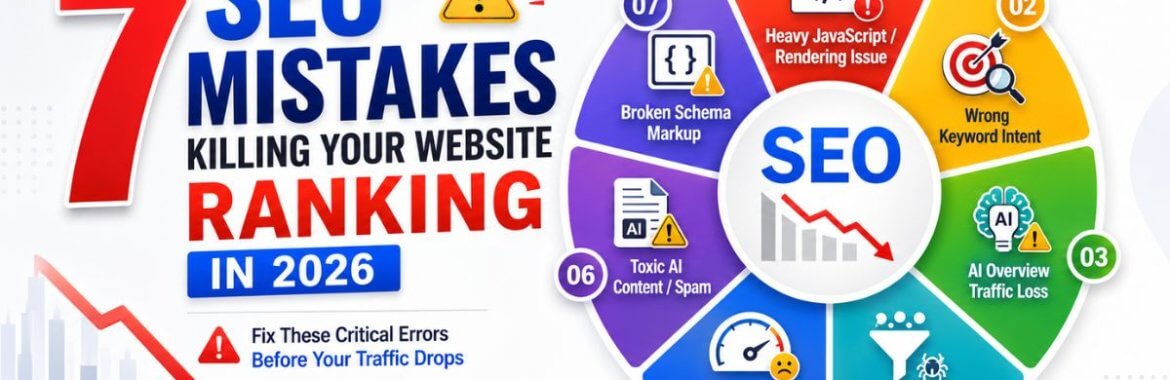
A server log review for a massive consumer electronics retailer last month revealed a harsh reality. Their organic traffic had flatlined in Q1. Management blamed a recent algorithm update. The actual problem was basic crawlability. This exact pattern appears constantly during enterprise infrastructure audits. The landscape shifted dramatically over the last two years, leaving old playbooks entirely obsolete. Many teams, including some well-known Digital Marketing companies in Chennai, keep applying outdated checklists to modern JavaScript frameworks. It breaks things.
AI overviews dominate the search engine results pages now. User behavior is highly fragmented. Technical debt accumulates faster than ever. If your organic revenue is dropping, you are likely failing at one of the core infrastructure levels below.
1. Shipping Heavy JavaScript Without Dynamic Rendering
You launch a beautiful React storefront. The UI is flawless. Googlebot sees a blank white page.
Client-side rendering takes time. If your server sends a bare HTML shell and forces the search crawler to execute heavy JavaScript to see your product descriptions, you will lose. The crawler simply times out. It moves on. One of the most common SEO mistakes right now involves hiding core text and pricing data behind unexecuted scripts.
Take a mobile phone product page. If the RAM specifications and price are fetched via an API call after the initial page load, Google often indexes the page without that critical data. The page ranks for nothing. You fix this by implementing dynamic rendering. You detect the bot. You serve the fully rendered HTML snapshot to the search engine, while serving the interactive JavaScript version to the actual human user. Force Google to render your heavy code, and your indexation delays will stretch from hours to weeks.
2. Optimizing for Search Volume Instead of Commercial Intent
Search volume is a trap. A client selling high-end gaming laptops spent eight months trying to rank for the phrase “best computers.” They eventually hit page one. Their conversion rate immediately collapsed.
The people searching that broad term wanted cheap desktops. They wanted basic research. They did not want a $2,000 rig.
Targeting broad, high-volume terms causes severe website ranking issues because Google tracks user interaction signals heavily in 2026. When three thousand people click your link and immediately bounce back to the search results, the algorithm registers a failed query. Your rankings drop across the entire domain. Stop looking at raw search volume. Target “i9 gaming laptop 32gb ram.” The search volume is tiny. The intent is absolute. Those users have their credit cards out.
3. Ignoring the AI Overview Disruption
Google’s AI overviews answer questions directly at the top of the screen. If your content strategy relies on answering simple queries like “what is a fast processor,” your traffic is already dead. Users read the AI answer and never scroll down to click your link.
This shift fundamentally changed SEO ranking factors this year. Traffic now goes exclusively to sites providing original research, distinct opinions, or first-hand experience. You have to offer something the language model cannot instantly synthesize.
- Publish proprietary usage data from your own customer base.
- Interview your internal hardware engineers.
- Post raw, unedited video demonstrations of your devices under stress tests.
If your page just aggregates information from other tech blogs, the AI will just aggregate your aggregation. You get zero clicks.
4. Falling into Faceted Navigation Traps
E-commerce sites rely on filters. Users want to sort smartphones by screen size, battery capacity, and camera megapixels. Every time a user clicks a filter, the URL changes. This creates millions of dynamic URLs.
Search engines attempt to crawl all of them. They waste your entire crawl budget on useless parameter pages like ?color=black&ram=8gb&sort=price_low. They never reach your actual new product launches.
You must map out the architecture to block this. Use the robots.txt file to disallow crawling of specific sorting parameters. Implement strict canonical tags pointing back to the main category page. When you let a crawler get lost in a massive matrix of filter combinations, you guarantee your priority pages will be ignored. Hundreds of thousands of duplicated, thin URLs routinely plague legacy tech stacks. Cleaning up faceted navigation often recovers lost traffic within days.
5. Passing Lab Tests but Failing Real User Experience
Developers optimize for the Lighthouse lab test. They defer scripts and compress images just enough to get a green score on a simulated desktop environment. Real users on 3G mobile networks still experience massive layout shifts and five-second interaction delays.
This remains a persistent entry on the list of common SEO mistakes because executives demand green dashboard scores. Google ignores your lab data. They use the Chrome User Experience Report (CrUX). They measure what actual humans experience on actual devices in the field. Interaction to Next Paint (INP) is ruthlessly enforced.
If your lab data says the page is fast, but field data shows users abandoning the checkout due to button latency, Google trusts the field data. Your rankings will drop. Stop tricking the testing tool. Optimize the critical rendering path for a mid-range smartphone on a weak cellular connection. That is reality.
6. Holding onto Toxic Programmatic Content
Publishing ten thousand AI-generated articles a month worked briefly in 2024. Then the spam updates hit. Entire domains were de-indexed overnight.
Companies try to recover from these self-inflicted website ranking issues by panic-deleting pages. That creates thousands of 404 errors, causing a secondary structural collapse. The cleanup is painful. You have to audit every single URL in your database.
You rewrite the high-potential pages from scratch using actual human experts. You 301 redirect the useless pages to relevant parent categories. You disavow the terrible backlinks generated by automated syndication networks. The era of cheap scale is permanently over. Quality requires actual friction, time, and financial cost.
7. Shipping Malformed Schema Markup
Rich snippets drive massive click-through rates. Getting star ratings, price drops, and live stock status directly in the search results gives you an unfair advantage over competitors. It relies entirely on structured data.
Many enterprise sites use outdated plugins that inject broken JSON-LD code into the header. The syntax has a missing comma. A required field like “brand” or “priceCurrency” is left blank. The schema fails validation silently.
This impacts SEO ranking factors indirectly through lost click-through rates. If your competitor has bright review stars and a price tag in their listing, and you just have a plain blue link, they steal the clicks. Test your code in the Rich Results Test tool. Check the Search Console error reports weekly. Code degrades as site infrastructure updates. A template change by a junior developer can strip the product schema tags from your entire inventory instantly. Monitor it constantly.
Fixing the Core Infrastructure
Traffic drops usually trace back to one of these specific architectural failures. Guessing is useless. The answers live in the server logs, the crawl errors, and the actual code rendering in the browser. Fixing these requires dedicated technical resources. It requires deep audits of your JavaScript execution and server responses. If your internal team lacks the bandwidth to untangle these structural problems, you need external infrastructure support. Finding a competent SEO company in Chennai that understands dynamic rendering and log file analysis is the necessary next step to stop the bleeding.