
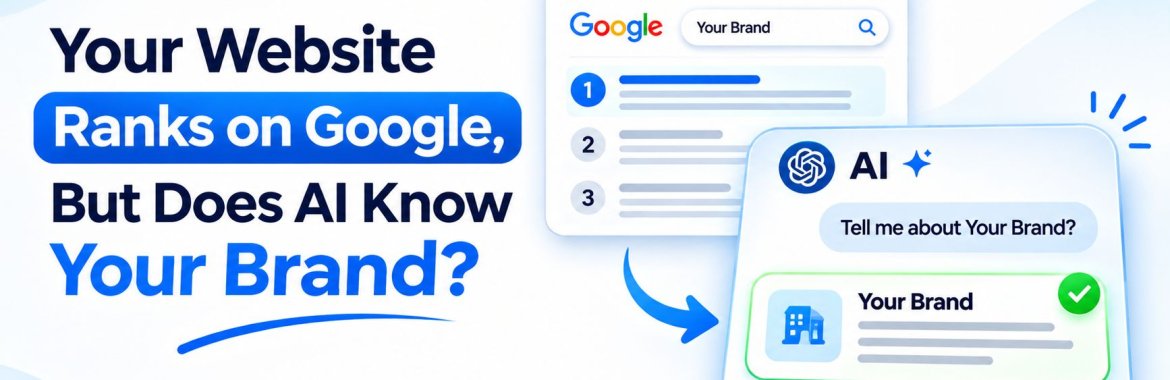
A page-one ranking shows that Google can find and rank your pages. It does not show that ChatGPT, Gemini, Perplexity or Google AI Overviews can describe your business correctly. These systems build answers from entities, consistent facts across the web, third-party mentions and content that is easy to extract, and a site that ranks well can still be weak on all four. Brands that work with SEO Companies in Chennai usually receive keyword and traffic reports, and those reports now need one more layer: how AI tools name, describe and recommend the brand. Below, we cover how AI systems form an understanding of a brand, how to test your visibility, which gaps to close first and how to measure the result, beginning with why rankings and AI recognition differ.
Why Google Rankings and AI Recognition Are Different Things
Google ranks documents: it scores pages against a query and returns links. An AI system assembles an answer and decides which businesses deserve a mention inside it. The first process rewards the relevance and authority of a page. The second rewards confidence in facts about an entity, such as what a company does, where it operates and who it serves.
Consider a Chennai clinic that ranks third for a treatment keyword. An assistant asked to list clinics offering that treatment names three competitors and leaves the clinic out. Its name appears with three spellings across directories, and its address differs between two listings.
How AI Systems Form an Understanding of Your Brand
Entity Recognition
AI models connect your business name to a group of attributes: category, location, founders, services and related brands. When these attributes match across your website, Google Business Profile, LinkedIn, industry directories and news mentions, the system treats your business as an established entity. When they conflict, the system either skips your brand or produces an inaccurate description.
Third-Party Corroboration
Models give more weight to what independent sources say about you than to what your own site says. Reviews, press coverage and industry listings all contribute.
Content Structure and Extractability
AI Overviews and answer engines pull passages that respond to a question directly. A paragraph with a clear opening statement, specifics and a named author is easier to extract than a page built around repeated keywords. Schema markup for Organization, LocalBusiness, Person, Service and FAQPage gives machines explicit labels so they do not have to infer them.
How to Test Whether AI Knows Your Brand
Run the same prompts on ChatGPT, Gemini, Perplexity and Google AI Overviews, and record every response in a spreadsheet. Use three prompt types:
- Brand prompts: “What is [brand name]?” and “What services does [brand name] offer in Chennai?”
- Category prompts: “Which companies offer [service] in Chennai?”
- Comparison prompts: “[Brand A] vs [Brand B] for [service].”
For each response, note whether your brand appears, whether the description is accurate, which sources the tool cites and which competitors appear beside you. Ask each prompt twice, because single runs vary.
Common Gaps That Keep Ranking Websites Out of AI Answers
Our audits return the same six findings repeatedly.
- Inconsistent business details: Name, address and phone number differ across listings. Standardise these details on every profile and directory.
- No Organization schema: The site offers no machine-readable identity. Add Organization and LocalBusiness schema with sameAs links.
- Missing author information: Blog posts carry no named author or credentials. Create author pages that state experience and qualifications.
- Few external mentions: The brand appears only on its own website. Earn coverage in industry publications and relevant directories.
- Keyword-led content: Pages circle a phrase without answering the query. Open each page with a two to three sentence direct answer.
- Blocked AI crawlers: robots.txt disallows crawlers such as GPTBot. Review each crawler and set access on purpose.
Some CMS plugins and security tools block AI crawlers by default.
What to Fix First
Correct Your Brand Facts Everywhere
List every place your business appears: Google Business Profile, social profiles, directories, marketplaces and press pages. Match the legal name, address, phone number, service descriptions and founding year across all of them. This produces the fastest gains in entity recognition. Your About, leadership and service pages should then state the same facts, with Organization schema linking to every verified profile.
Earn Mentions From Sources AI Systems Trust
Pitch commentary to publications that cover your sector, publish client case studies with named results and join industry associations that list their members. A mention in a sector publication gives a model a more relevant signal than a generic directory listing.
Rewrite Key Pages for Direct Answers
Place the answer to each page’s main question in the first two or three sentences, then follow with pricing ranges, timelines, service areas and named experts.
How We Approach AI Visibility at Infinix
At Infinix, we begin every engagement with a prompt audit across four AI platforms, followed by an entity audit of your website and listings. We then correct listings, implement schema and restructure priority pages, in that order, and we report on Google rankings and AI mentions in the same dashboard.
How to Measure Progress
Rankings no longer show whether AI tools recognise your brand, so we add four measurements to every report.
- Mention rate: Count how many of your 20 to 30 monthly test prompts name your brand.
- Description accuracy: Check the services, city and specialisation in each answer against what you offer. A wrong service line calls for a content fix, not more mentions.
- Citation share: Note how often your domain appears among the sources in Perplexity and AI Overviews.
- Branded search: Filter Search Console queries containing your brand name and track them over three to six months.
Branded queries often climb once a brand appears in AI answers, because buyers who see a name there look it up directly. Advertising and PR move the same number, so treat the rise as supporting evidence only.
Conclusion
Digital marketing in Chennai now involves two measurements: where your pages rank and whether AI systems describe your brand correctly. Rankings bring visitors who search. AI answers influence buyers who ask, and they ask before they ever open a results page. Consistent entity facts, structured content and independent mentions give your brand a place in both.
Infinix can run the prompt audit, entity audit and schema review for your business and report the findings in plain terms. Contact our team to see how AI tools currently describe your brand.
Frequently Asked Questions
What is AI visibility?
AI visibility is how often, and how correctly, tools such as ChatGPT, Gemini and Perplexity name your brand when someone asks about your category or your city. We measure it by testing a fixed set of prompts and recording what each tool says.
Does a Google ranking guarantee a mention in AI Overviews?
It does not. A ranking page can feed an AI Overview, but the system also looks for confirmation of the brand behind that page, such as consistent listings, reviews and independent coverage. A first-ranking page can still go uncited when the brand has mismatched profiles.
How long does it take for AI tools to recognise a brand?
Corrected listings and schema can show effects within a few weeks, depending on how often each platform refreshes its sources. Authority from external mentions builds over several months. We retest monthly to link each change to its result.
Does schema markup make AI tools mention my brand?
Schema helps machines read your business name, services and authors accurately, but it will not produce a mention on its own. We implement it alongside listing corrections and outside coverage.
Can a small local business appear in AI answers?
It can. A dental clinic in Velachery with consistent listings, recent reviews and a service page for each treatment gives an assistant concrete details to quote when someone asks for a clinic in that area. The amount of verified information matters more than the size of the business.