
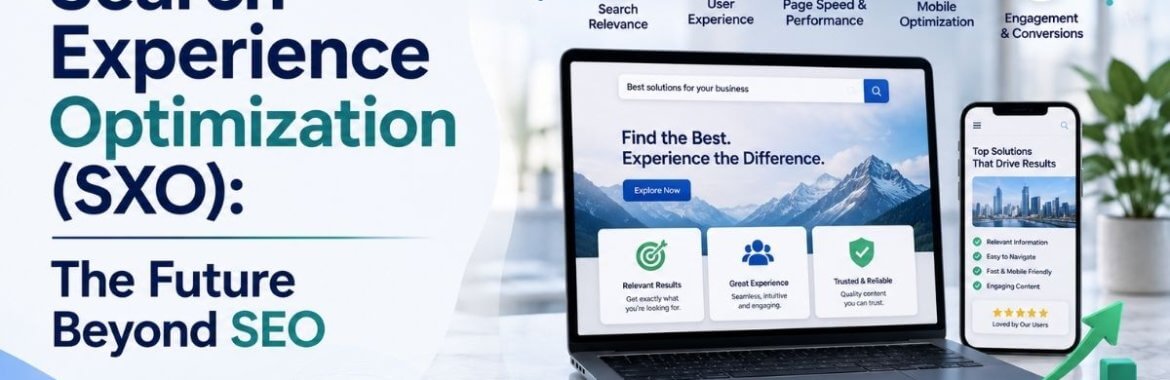
Ranking on page one used to be the finish line, but that’s changed now that Google’s AI Overviews answer questions before anyone clicks a link, and people bounce off slow, confusing pages within seconds of landing on them. That’s why Search Experience Optimization, or SXO, is becoming the real goal for any digital marketing agency in Chennai worth hiring. It combines the SEO groundwork you already know, keywords, site structure, backlinks, with the parts SEO alone never covered: page speed, clear content, easy navigation, and design that keeps someone around long enough to actually do something. Below, we walk through what SXO means in practice, why SEO by itself stops working somewhere around the click, the handful of things that make SXO succeed, how AI Overviews are quietly rewriting the rules of visibility, and why Google (and now AI tools) care more about trust signals than they used to. This blog will also touch on where local SEO fits in and how this plays out on our own projects. Here’s the breakdown.
What Is SXO, Exactly?
SXO stands for Search Experience Optimization. It’s not a replacement for SEO. Think of it as SEO’s more complete cousin. Traditional SEO gets people to your site. SXO makes sure they stay, understand what you offer, and take action, whether that’s filling a form, calling you, or buying something.
Here’s the simple difference:
| Traditional SEO | Search Experience Optimization |
| Focuses on rankings | Focuses on rankings and what happens after the click |
| Keyword placement | Keyword intent + content clarity |
| Backlinks and technical fixes | Backlinks, technical fixes, plus speed, design, and usability |
| Measures traffic | Measures traffic, engagement, and conversions |
Google has said as much in its own guidance too: content and user experience now sit at the center of how pages get evaluated, not just technical signals.
Why SEO Alone Doesn’t Cut It Anymore
You can rank first for your target keyword and still lose the customer. Here’s why:
- Slow pages lose visitors fast. Most people leave a site that takes more than a few seconds to load.
- Confusing layouts kill conversions. If someone can’t find your contact number or pricing in ten seconds, they’ll go to a competitor.
- Search engines now reward experience, not just keywords. Google’s Core Web Vitals directly measure loading speed, interactivity, and visual stability, and these affect your rankings.
- AI-generated answers are eating clicks. If your content only targets keywords without answering the actual question clearly, AI Overviews will skip you and quote a competitor instead.
Ranking well and converting well used to be two separate jobs. Now they’re one job, and that job is SXO.
The Core Pillars of SXO
Infinix builds every SXO strategy around five things. Skip any one of them and the rest starts to wobble.
Site speed and technical health. Fast loading, a mobile-friendly layout, clean code, no dead links. This is still the floor, not the ceiling.
Content that actually answers the question. Write for the person first. If it also happens to use the phrasing search engines expect, good, but that comes second.
Navigation people don’t have to think about. Menus, internal links, page layout, all of it should point toward what the visitor actually came for.
Trust signals scattered throughout. Author names people can look up, real reviews, case studies, a checkout that doesn’t feel sketchy, business details that check out.
Design built around getting someone to act. A clear button, readable text, a form that asks for two things instead of ten.
Get four of these right and skip the fifth, and you’ll still leak business somewhere.
How AI Overviews Are Changing Search
AI Overviews sit at the top of Google’s results now, answering the question before anyone reaches a website link. That’s changed what actually matters for anyone doing SEO work in 2026.
Content that’s organized clearly, with real headings and direct answers, gets pulled into those summaries more often than content that buries the point three paragraphs in. And there’s a bigger shift underneath that: being the source AI decides to trust now counts for more than sitting at the top of the blue links. Sites with solid EEAT signals and information nobody else has already said get cited. Sites that just reword what’s already ranking don’t.
Which is a strange kind of relief, honestly. Content written properly for actual people is usually the same content AI tools end up pulling from anyway.
EEAT: Trust Is the New Ranking Currency
EEAT, Experience, Expertise, Authoritativeness, Trustworthiness, is the framework Google uses to decide whether your content deserves to rank. It’s also increasingly what decides whether AI tools reference you at all.
In practice, that looks like: showing real work instead of talking about it in the abstract, having someone who actually knows the subject write or check the content, building up mentions and backlinks over time instead of all at once, and being upfront, real contact details, real ownership, no inflated claims.
Fake this and you’ll get filtered out eventually. Build it properly and the climb keeps going.
Where Local SEO Fits In
If your business serves a specific city, SXO without local SEO is only half done. Someone searching “near me” or typing your city name expects a few basics to already be in place: a verified, fully filled-out Google Business Profile, landing pages built for specific locations rather than one generic About page, the same business name, address, and phone number wherever your business is listed, and real reviews from real customers, which do double duty as trust signals and as content AI tools can pull from.
Get the local details right alongside a fast, trustworthy site, and that’s what actually turns a local search into a local customer.
How InfiniX Approaches SXO at Infinix
InfiniX doesn’t split SEO and user experience into separate teams working from separate briefs. When we take on a project, we look at site speed, content clarity, the path to conversion, and trust signals as one connected thing, because that’s how Google and AI tools judge you anyway.
That usually means a full technical and UX audit first, then rewriting content around what people are actually searching for rather than stuffing in keywords, tightening up speed and mobile performance, adding the EEAT pieces that are missing, author credentials, case studies, verified details, and setting up local SEO properly for the cities you actually serve.
Frequently Asked Questions
1. Is SXO the same as UX design?
Not really. UX is how your site feels to use. SXO adds SEO on top of that, so a good experience also shows up in search and gets picked up by AI tools, not just liked by visitors.
2. Do I need to redo my whole website for SXO?
Usually not. Most sites need a handful of targeted fixes, faster loading, clearer structure, better calls to action, rather than a full rebuild. A rebuild only makes sense if the foundation itself is broken.
3. How does SXO affect AI Overviews specifically?
Clear, well-organized content backed by real trust signals gets picked up by AI summaries a lot more often. Thin or messy content usually just gets skipped.
4. Does SXO help local businesses?
Definitely, and it gets even better paired with local SEO: a filled-out Google Business Profile, pages for each area you serve, that kind of thing.
5. How long before SXO shows results?
Speed tweaks? A few weeks. Building real trust and better content takes longer, think a few months before rankings and conversions actually move.
6. Can small businesses afford SXO, or is it only for big brands?
SXO is really just doing SEO properly, with user experience built in. It scales to any budget; the priorities just shift based on what needs fixing first.
Final Thoughts
Search Experience Optimization isn’t a trend. It’s what SEO always should have been: getting found, and then giving people a reason to stay and take action. If your rankings look fine but your business results don’t, the gap is usually experience, not visibility. As a trusted SEO company in Chennai, we build websites and content that work for search engines, AI tools, and real people at the same time. Reach out to us if you want a site that ranks and actually converts.