
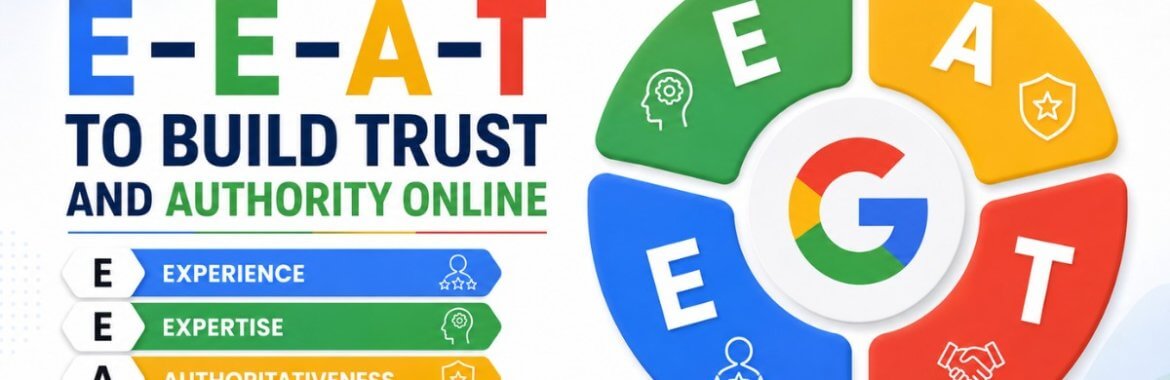
Most websites that struggle to rank share a common problem. They produce content, tick technical SEO boxes, and still wonder why Google keeps them off page one. The answer often comes down to one framework: E-E-A-T in SEO. It stands for Experience, Expertise, Authoritativeness, and Trustworthiness, and it’s how Google decides which websites deserve to be seen and which ones don’t. If your content doesn’t signal these four qualities clearly, rankings become harder to hold, regardless of how well everything else is done. At infiniX360, a results-driven provider of digital marketing services in Chennai, building E-E-A-T into every content and SEO strategy is a non-negotiable. This guide breaks down what E-E-A-T actually means, why it matters, and how to build it into your website in a way that Google and your audience both respond to.
What E-E-A-T Actually Means
E-E-A-T in SEO comes from the Google Search Quality Guidelines, the document Google uses to train human quality raters. These raters evaluate pages across thousands of searches. Their assessments don’t change rankings directly, but they shape how Google’s algorithm learns to separate genuinely useful content from the rest.
The four components:
- Experience — Has the person behind the content actually done the thing they’re writing about? A product review from someone who used it for six months reads differently from one written from a spec sheet.
- Expertise — Does the author have real depth on the subject, or are they covering the surface? The standard varies by topic, but the question is always whether the content could have only been written by someone who actually knows the field.
- Authoritativeness — Do people outside your website treat you as a credible source? This shows up in backlinks, mentions, citations, and whether others in your industry point to your work.
- Trustworthiness — Is the site accurate, transparent, and safe? Named authors, verifiable claims, working security certificates, and honest business practices all feed into this.
Google added Experience to the original E-A-T framework in 2022. The shift acknowledged that lived, practical knowledge carries weight that credentials alone don’t always capture.
Why E-E-A-T Matters More Than Ever
Google wants to surface content that’s actually useful, not just content that’s technically optimised. The two aren’t the same thing, and the gap between them is where a lot of websites get stuck.
The stakes are highest for what Google calls ‘YMYL’ topics: health, finance, legal advice, anything that could affect someone’s life in a meaningful way. A blog post on managing diabetes written by an anonymous author will lose ground to one written by a named medical professional with verifiable credentials, regardless of keyword density.
But this isn’t only a YMYL concern. Every website competes for attention in a crowded space, and generic content written without real knowledge or perspective holds its position less reliably over time.
How to Build Experience Into Your Content
Experience is harder to fake than expertise. Here’s what actually signals it:
- Write from what you’ve done, not just what you know. Case studies, campaign results, project outcomes, and specifics that only come from having been in the situation.
- Publish original data. Internal findings, client results, test outcomes. If you’ve measured something, share it. Nobody else has that number.
- Show the work. Portfolios, before-and-after results, and documented processes. Evidence beats assertion.
- Name your authors. A bio with a real background attached to the content tells Google and the reader that a person with skin in the game wrote it.
How to Demonstrate Expertise
Expertise shows up in what you choose to cover and how far you go with it.
- Answer the follow-up questions, not just the headline one. Content that stops at the obvious answer reads like it was written by someone who searched for the topic five minutes before writing.
- Link to your sources. When you cite data, point to the original. It shows you’ve verified it and gives the reader somewhere to go.
- Update your content. A page that hasn’t been touched in three years in a fast-moving field signals that no one is minding it.
- Build topic depth across your site. One blog post doesn’t establish expertise. A set of interconnected content that covers a subject from multiple angles does.
How to Build Authoritativeness
Your own website can’t make you authoritative. That happens elsewhere, through what others say about you and whether credible people in your space point to your work.
- Backlinks from respected sources carry real weight. When a well-regarded website links to your content, Google reads it as a vote. Getting those links means creating content specific enough and useful enough that someone else finds it worth referencing.
- Industry mentions add up over time. A guest post, a podcast appearance, a quote in a publication your audience reads, each one adds a layer to how your brand is perceived outside your own channels.
- Social proof is part of the picture, too. InfiniX360’s 4.9 rating from over 1,247 reviews isn’t just a number for the homepage. It’s the kind of consistent external validation that search engines notice.
- Consistency across channels matters. A brand that sounds different on LinkedIn than it does on its website creates friction. Authority is built through repetition, not through a single impressive page.
How to Strengthen Trustworthiness
Trust is what keeps a user on your site long enough to convert and what keeps Google from quietly deprioritising your pages.
- Technical basics first. SSL, fast load times, and mobile performance. These aren’t optional extras; a site that feels broken signals that no one is paying attention.
- Show who’s behind the business. Named team members, a real address, and accessible contact details. Anonymity doesn’t build confidence.
- Keep your content accurate. One factual error can undo a lot of credibility. Verify before publishing and update when things change.
- Respond to criticism well. A professional response to a bad review often builds more trust than the review loses.
The Google Search Quality Guidelines and What They Tell Us
The Google Search Quality Guidelines document is publicly available and worth reading if you’re serious about SEO. It runs to hundreds of pages and covers how quality raters assess pages across multiple dimensions. What it makes clear is that Google isn’t just measuring keywords and links. It’s trying to evaluate whether a website is genuinely useful, whether the people behind it know what they’re talking about, and whether users can trust what they find there.
The Google Search Quality Guidelines place particular emphasis on the “needs met” concept: does the page actually satisfy what the user was looking for? A page that technically ranks for a keyword but leaves users with more questions than answers isn’t meeting that standard.
Putting E-E-A-T to Work: A Practical Starting Point
EAT expertise, authority, and trust aren’t built in a sprint. It accumulates through consistent decisions made across content, SEO, and reputation. A quick audit tells you where the gaps are:
- Does every key page have a named author with a visible background?
- Is your content detailed enough to answer follow-up questions, not just the headline question?
- Do credible websites in your space link to you?
- Can a first-time visitor find your reviews, contact details, and security signals without digging?
- Does what you publish match what you actually do as a business?
Whatever this audit surfaces is where to start.
Conclusion
EAT expertise authority trust can’t be faked over the long run. Google’s systems are built to identify content that earns its position versus content that’s just trying to appear credible. The websites that hold their rankings have usually done the unglamorous work: consistent publishing, real author credentials, genuine backlinks, and a site that doesn’t give users a reason to bounce.If you’re serious about building that kind of presence, the team at infiniX360 knows how to put these principles to work practically. Their SEO services in Chennai are built around content and strategy that builds actual authority, not just the appearance of it. That’s the difference between rankings that last and ones that don’t.