
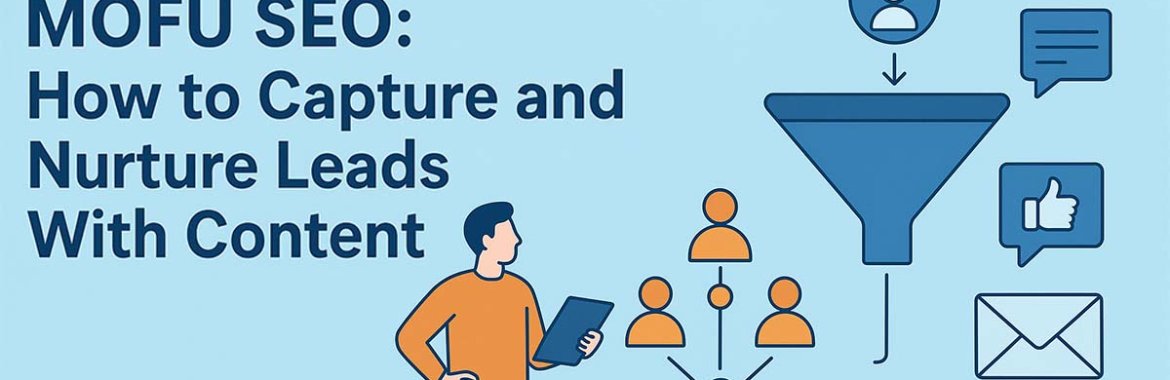
After awareness is built through TOFU SEO, the next step is guiding that interest toward genuine consideration. This is where MOFU SEO comes in. Infinix360 works with businesses to strengthen their MOFU SEO, the stage where visitors shift from curiosity to serious evaluation. At this point, the middle of the funnel content becomes essential. At this point, people don’t want general awareness articles; they want specifics like clear comparisons and proof they can rely on. When brands provide this type of guidance, interest deepens into trust, and trust eventually turns into qualified leads.
What Makes MOFU SEO Different?
The middle of funnel is where people begin to move past curiosity. A visitor who once searched broad queries through TOFU SEO now looks for specifics: which service fits their need, what results others have seen, and whether a provider can be trusted. This stage is where MOFU comes into play.
In the middle of funnel, the visitors already focus on the problem they want to be solved. They do not want to hear general stories anymore. Evidence is key, so share actual service descriptions, real case studies, and testimonials that help to remove doubt.
Strong content at this point keeps potential customers engaged rather than losing interest halfway. Businesses often bring in SEO companies in Chennai to structure this stage properly, since MOFU SEO is where casual interest starts turning into qualified leads.
Reading User Intent in the Middle of Funnel
Search behavior changes a lot once people reach the middle of funnel. Early on, they ask broad questions just to understand the topic. At this stage, the searches narrow. Instead of “what is SEO,” they might ask solution-based queries like “best SEO platform for small business”. Those queries show that the person has moved from learning to comparing.
The job of MOFU content is to meet those comparisons head-on. It should explain the differences between options, answer common concerns, and show why one approach might suit better than another. This is where mid funnel marketing is less about visibility and more about clarity.
When handled well, middle of funnel content keeps prospects engaged. If the intent is clear and the content responds to it directly, people continue their research with the brand instead of dropping off to start over elsewhere.
Formats That Hold Attention at the Middle of Funnel
Comparison pages
This is where people type “X vs Y” or “best option for…” because they want clarity before deciding. A well-structured comparison doesn’t oversell; it simply lays out differences and helps the reader feel they’re making an informed choice.
Testimonials and reviews
At the middle of funnel stage, people look for proof that a service works. Real client feedback, project outcomes, or even simple before-and-after snapshots show credibility far better than promises ever can.
Webinars and demos
Some questions need to be shown, not told. A product demo or short webinar lets prospects see the service in action, ask questions, and picture how it fits their own needs.
Whitepapers and in-depth guides
For prospects who want more detail, a well-prepared guide or whitepaper signals expertise. It answers deeper questions and keeps the brand in view during longer decision cycles.
Effective middle of funnel content is less about traffic and more about reassurance. Each format reduces doubt and keeps prospects moving closer to action.
Optimizing MOFU SEO for Better Lead Nurturing
Creating middle of funnel content is only half the work. For it to actually move people forward, it needs to be structured, linked, and measured with intent.
Clear positioning
Middle of funnel content should make it obvious who the service is for and what problems it solves. If prospects can’t see themselves in the examples or explanations, they’ll lose interest.
Internal linking with purpose
Content in the middle of funnel should smoothly direct readers toward the next action. A case study can lead to a service page, or a detailed blog can connect to a consultation form. Done well, these links act like signposts that make the journey smoother instead of salesy.
Measure Engagement Beyond Clicks
The MOFU stage uses clicks as entry and engagement as the means of progression. The true goal of the stage is most evident in the aspect of content engagement. How long do they spend reading? Do they complete the resources or sign up for the webinar? Such actions indicate the mastery of funnel content as it confirms that interest has graduated to the intent level.
Common Challenges in MOFU SEO and How to Address Them
1. Overloading the reader
Mid Funnel marketing content often drowns prospects in detail. A ten-page whitepaper or a technical guide can feel like too much when someone is only weighing options. The task here is to balance and give enough clarity to move them forward, but save the heavy lifting for later in the journey.
2. Gaps between content pieces
Mid-funnel content often fails because it treats each asset in isolation. A reader might finish a case study and hit a dead end, with no suggestion of where to go next. That pause is enough for interest to fade. Strong MOFU planning makes sure every page connects logically to another; whether that means linking a guide to a service explainer, pairing an experience statement with a demo invite, or pointing from an article to a client example. The idea is simple: never leave the prospect stranded.
3. Generic messaging
Mid-funnel leads are already evaluating alternatives. This is the point where generic assertions become less useful. What moves the needle is definitive proof, be it metrics, case studies, or a no-nonsense description of how your approach untangles a defined problem. The more bulleted and tactical the material, the more effortless it is for people to wrap their heads around it. When leads are shown evidence rather than vague suggestions, it is more probable that they will recall your offer and will retain it on the shortlist.
4. Ignoring engagement signals
Traffic is easy to celebrate, but it doesn’t tell the full story. What matters at the middle of funnel is whether readers download a guide, watch a webinar, or spend time exploring examples. Those behaviours are the signs that curiosity is turning into trust.
5. Weak connection with BOFU SEO
This stage should lead people naturally toward a decision. If the content doesn’t connect to service details, consultations, or pricing information, the process stalls. A reader finishing a MOFU article should know exactly where to go next, without having to search for it.
How to Measure MOFU SEO Performance?
Lead quality over raw numbers.
Mid-funnel work is not judged by how many enquiries come in but by whether they are the right kind. If the bulk of form fills or calls are from people who will never buy, the content is not tuned to intent.
Depth of interaction with content
When it comes to mid-funnel material, the real measure isn’t how many people land on the page; it’s how they use it. If they read through a case study, stay for a webinar, or download a resource, that shows they’re not just browsing. That behaviour reflects careful consideration, the step before shortlisting a provider.
Progression into decision-focused assets
The best proof of MOFU strength is movement toward bottom-of-funnel material. When someone who reads a comparison page then looks at pricing or requests a demo, it shows the content has done its job.
Role in assisted conversions
Middle of funnel content rarely closes the deal directly. Instead, it shapes the path. Analytics that show how often these assets appear before a conversion provide the clearest measure of impact.
A Simple Journey: From TOFU Blog to MOFU Case Study to BOFU Action
A reader first finds a TOFU blog while searching “why is my site not ranking?” They learn the basics and follow a link to an MOFU case study that shows how similar businesses improved visibility. The details, challenges, methods, and results together build trust. From there, the reader moves naturally into BOFU material, such as a consultation page, where they can speak to the team directly. Each stage does its part, turning early curiosity into a qualified lead.
Final Thoughts
Infinix360 believes that SEO funnels are a journey in which a prospect travels from finding your business’s name to trusting your business enough to act. At this point of the process it is less about how many more blogs we create versus providing something tangible; something that can be seen as proof of actual results via case studies, a detailed guide showing expertise, or real client comments that convey authenticity. The combination of these elements will not only give them greater confidence but also establish you as a credible source and assist in propelling prospects through the decision-making process.
MOFU SEO is not about pushing hard. It’s about demonstrating that we understand the questions people bring at this stage and providing them with Clarity before they make a decision. As a team delivering Digital Marketing services in Chennai, our role is to make that journey smoother, so leads don’t stall but continue forward into real conversations.
Leave a Reply